Building User's habit to do Check-in

Commitment is hard. This project teaches me how to make user commit to doing a check-in every day by bridging their intrinsic motivation.

Project: Building User's habit to do Check-in Summary: Commitment is hard. This project teaches me how to make user commit to doing a check-in every day by bridging their intrinsic motivation. Role: Product Designer Platform: Shopee Timeline: Q1-Q2 2024 Status: Released Tags: Gamification, Widget, Habit Loop, Engagement Key Results & Business Metrics: - Daily Active Users: +38% - 7-Day Retention: +24.5% - Check-in Completion: 82% Problem Statement: Users forget to open the app solely for check-ins, leading to broken streak anxiety and eventual churn. Solution: A dynamic home-screen widget displaying real-time streak count, countdown timers, and progressive visual milestone rewards that can be claimed in 1-tap. The BIG question: How do we make our users commit to doing a coin check-in daily? User Goals: Get more coins by doing hassle-free check-in every day. Our Hypothesis: Combining Fogg Behavior Model with Variable Rewards, bridging motivation states with typical user daily patterns. The Fogg Behavior Model states that to change behavior, three things need to happen simultaneously: motivation, ability, and a prompt/trigger. Read more about Fogg Behavior Model ↗ For Variable Rewards, there are three types: social rewards (tribe), hunting rewards (deals, bonuses), and personal mastery. Read more about Variable Rewards ↗ Our Solution: Check-in Widget on Android and iOS We broke user behavior down into three possible scenarios. In Scenario 1, the user hasn't checked in yet. Data shows high motivation, but friction causes delays. In Scenario 2, inactivity indicates slipping motivation, which we counter with progressive rewards. Scenario 2 & 3: Distraction Recovery & Streak Preservation Seeing progress not only gives users a feeling of accomplishment, but also motivates them to keep the streak alive so they don't forfeit hard-earned coin multipliers. Other Regions Localization Findings, Reflections & Key Learnings: Universal vs. Context-specific design?: When designing for different countries across various continents, we have two options: tailor the design to each culture or create a universal design that works for everyone. We decided to go with the universal approach. BE FLEXIBLE: When working with different stakeholders from different background, it's important to understand each person's point of view. We should dive deep into any comments that need clarification to avoid misunderstandings and ensure everyone is on the same page. ASKING IF YOU STUCK: I only had a basic idea of these two theories, so I asked the PM about them. Fortunately, he's really knowledgeable, and I was able to learn a lot more. Asking right question is also the key. THE METRICS: As I'm writing this, the experiment is still in progress, but the latest results show that the group with the widget installed has a 2x% better retention rate compared to the control group.

Latest Work

Building User's habit to do Check-in

Commitment is hard. This project teaches me how to make user commit to doing a check-in every day by bridging their intrinsic motivation.

Building User's habit to do Check-in

Tags

GamificationWidgetHabit LoopEngagement

Role

Product Designer

Status

Released

Timeline

Q1-Q2 2024

Product or Platform

Shopee

The BIG question: How do we make our users commit to doing a coin check-in daily?

User Goals: Get more coins by doing hassle-free check-in every day.

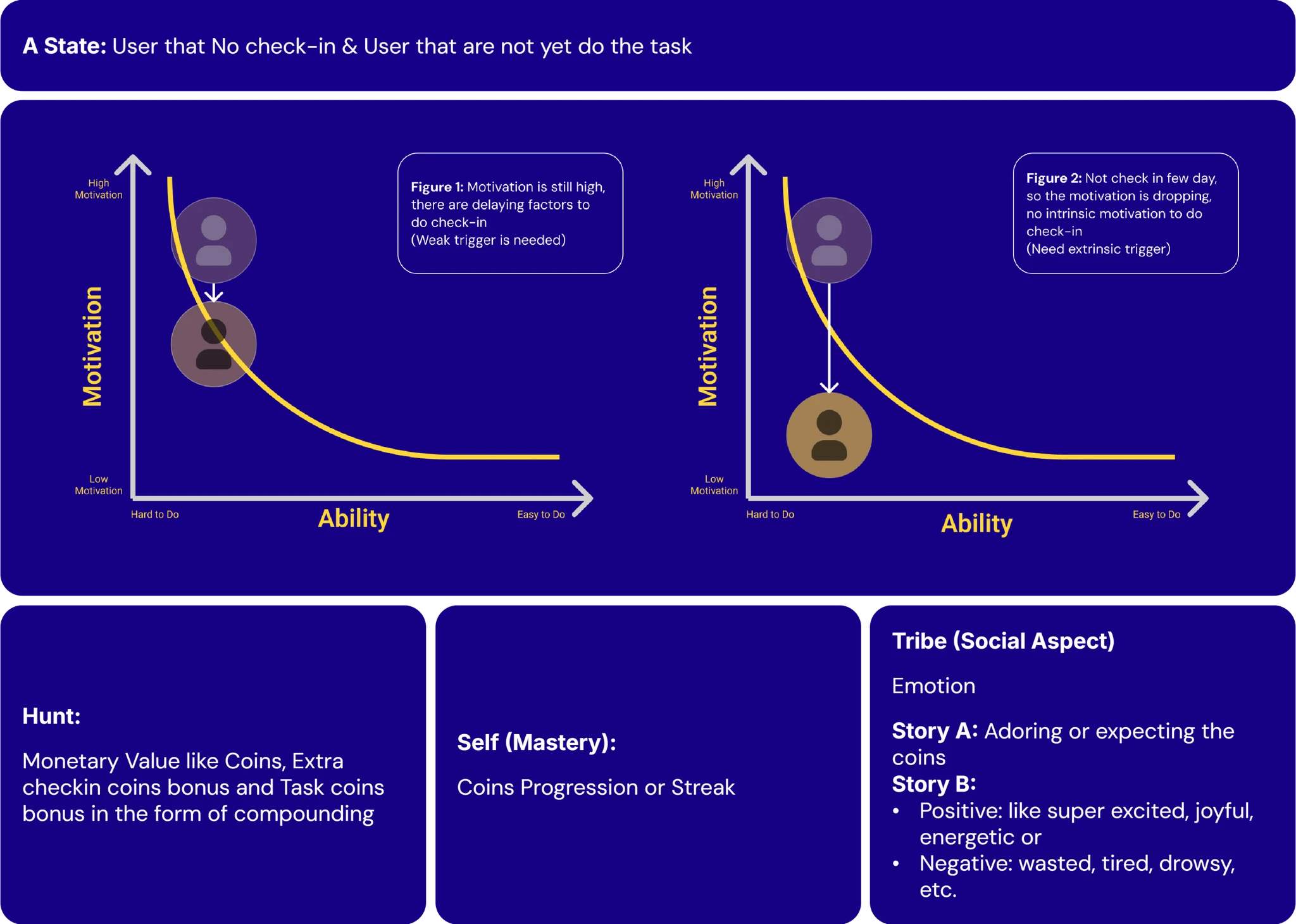
Our Hypothesis: Combining Fogg Behavior Model with Variable Rewards, bridging motivation states with typical user daily patterns.

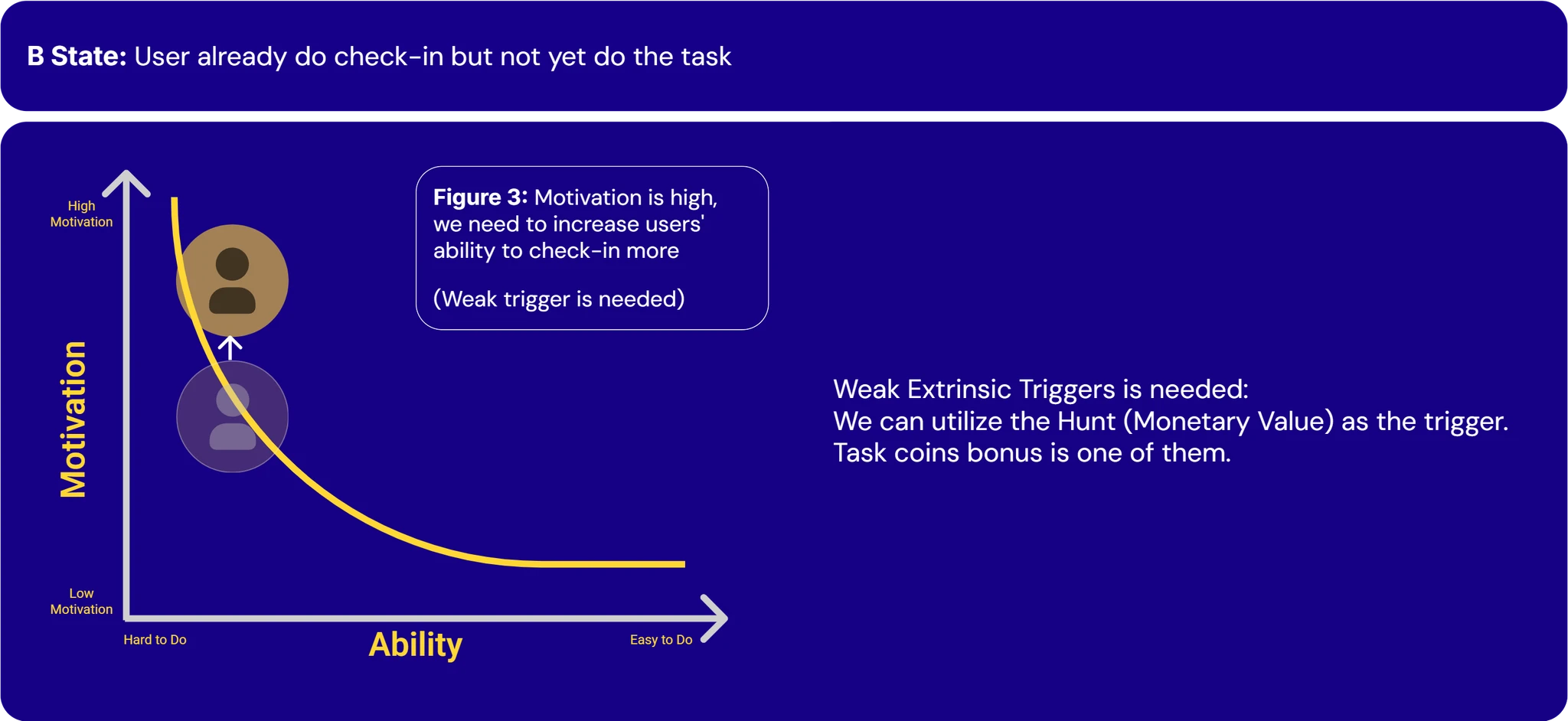
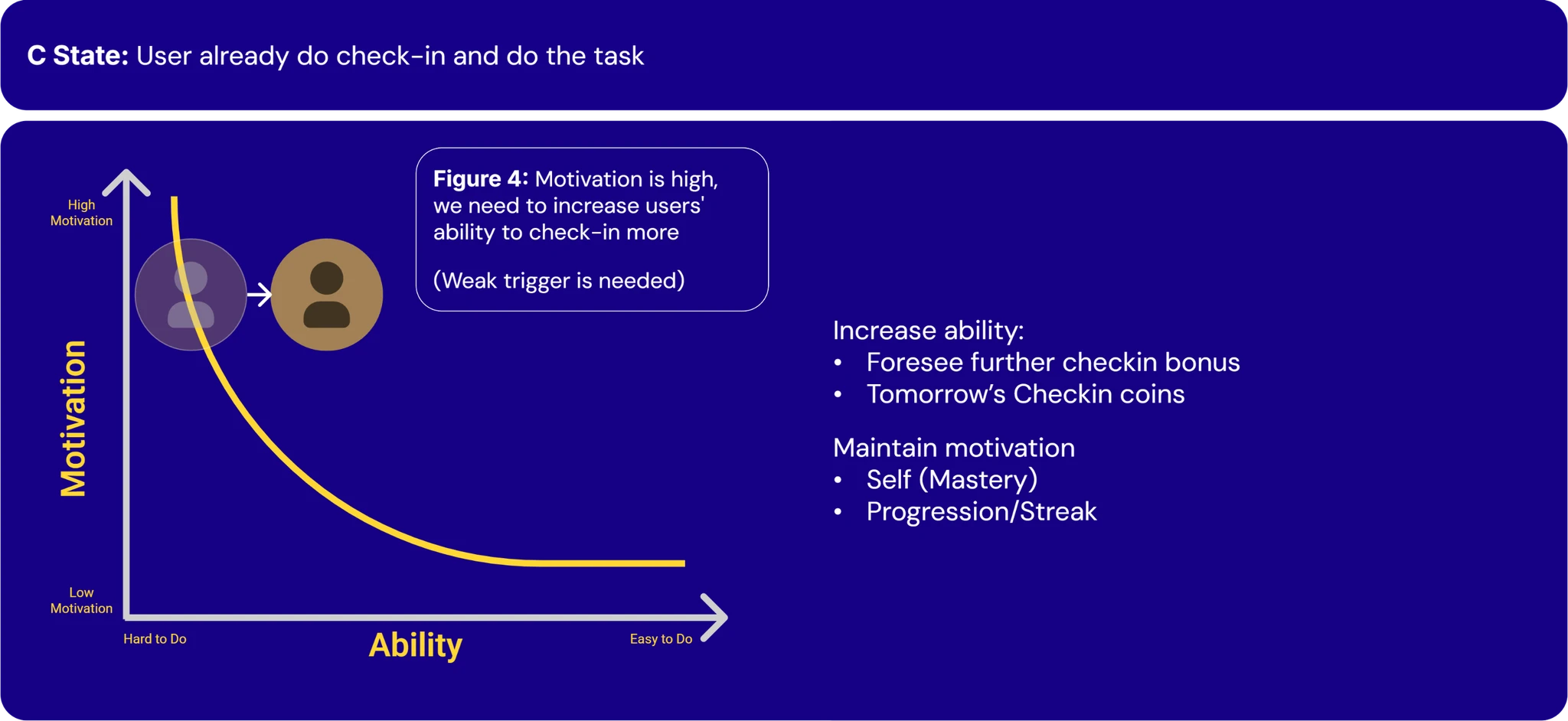
The Fogg Behavior Model states that to change behavior, three things need to happen simultaneously: motivation, ability, and a prompt/trigger. Read more about Fogg Behavior Model ↗

For Variable Rewards, there are three types: social rewards (tribe), hunting rewards (deals, bonuses), and personal mastery. Read more about Variable Rewards ↗

Our Solution: Check-in Widget on Android and iOS

Widget Design Exploration for iOS
Android Home Screen Widget Specs

We broke user behavior down into three possible scenarios. In Scenario 1, the user hasn't checked in yet. Data shows high motivation, but friction causes delays. In Scenario 2, inactivity indicates slipping motivation, which we counter with progressive rewards.
Streak counter & progressive milestone reward states
Interactive widget states on phone screen
Scenario flow mapping
Mascot nudge animations

Scenario 2 & 3: Distraction Recovery & Streak Preservation
Visual feedback upon successful check-in
Bonus multipliers and milestone celebration

Seeing progress not only gives users a feeling of accomplishment, but also motivates them to keep the streak alive so they don't forfeit hard-earned coin multipliers.

Floating video tutorial for iOS widget setup

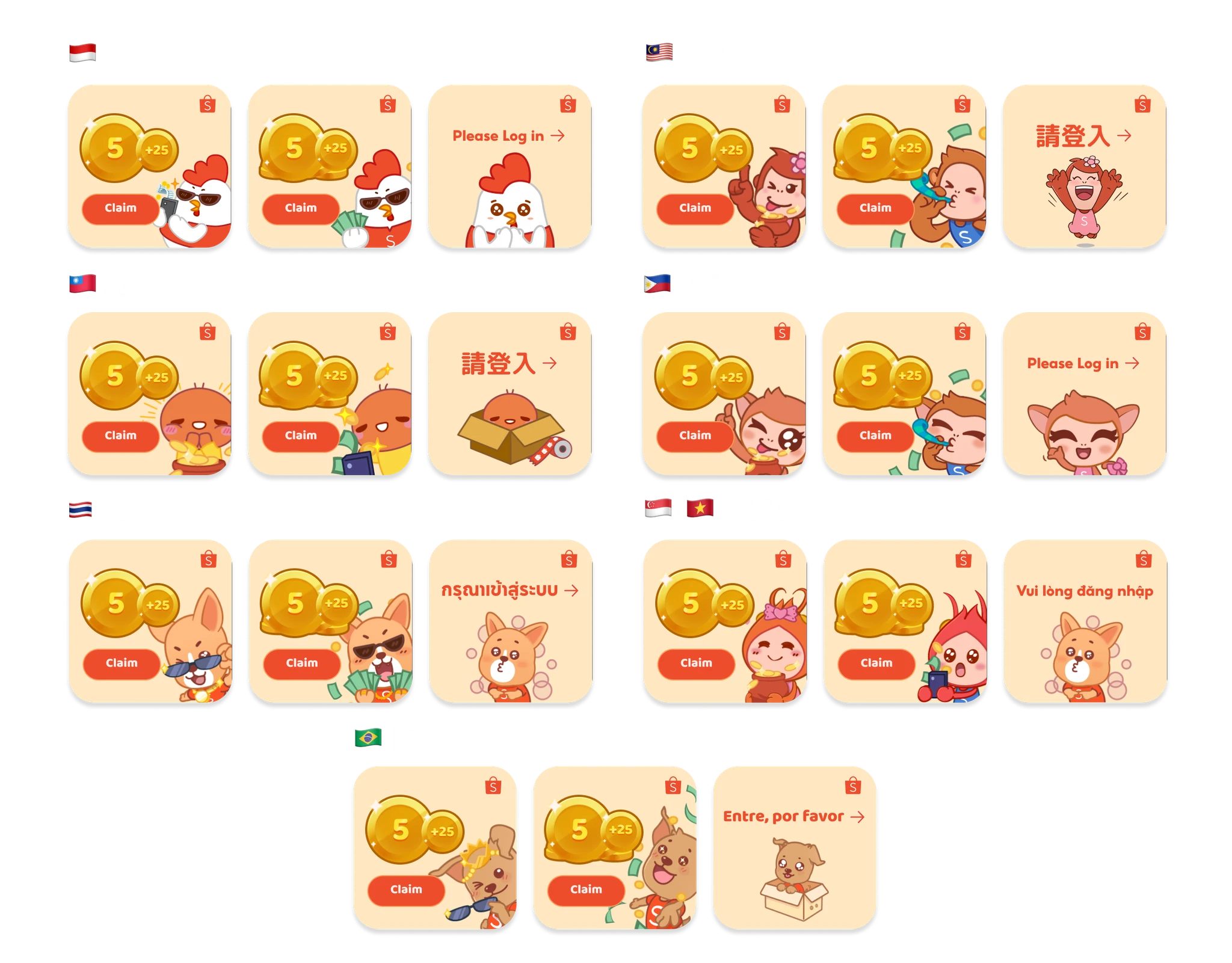
Other Regions Localization

Multi-region asset matrix (ID, MY, SG, PH, VN, TH, TW, BR)

Findings, Reflections & Conclusions

Universal vs. Context-specific design?

When designing for different countries across various continents, we have two options: tailor the design to each culture or create a universal design that works for everyone. We decided to go with the universal approach.

BE FLEXIBLE

When working with different stakeholders from different background, it's important to understand each person's point of view. We should dive deep into any comments that need clarification to avoid misunderstandings and ensure everyone is on the same page.

ASKING IF YOU STUCK

I only had a basic idea of these two theories, so I asked the PM about them. Fortunately, he's really knowledgeable, and I was able to learn a lot more. Asking right question is also the key.

THE METRICS

As I'm writing this, the experiment is still in progress, but the latest results show that the group with the widget installed has a 2x% better retention rate compared to the control group.