Case Study
Cozy: From zero owned supply to 110 live hotels in 6 months
I designed the extranet that let BookCabin own its hotel inventory instead of renting it from third parties. Solo design lead from first sketch to shipped; no domain knowledge, no design system, no product manager from the start. That turned out to be the point, not the problem.
01 — Context
One app for flight and room.
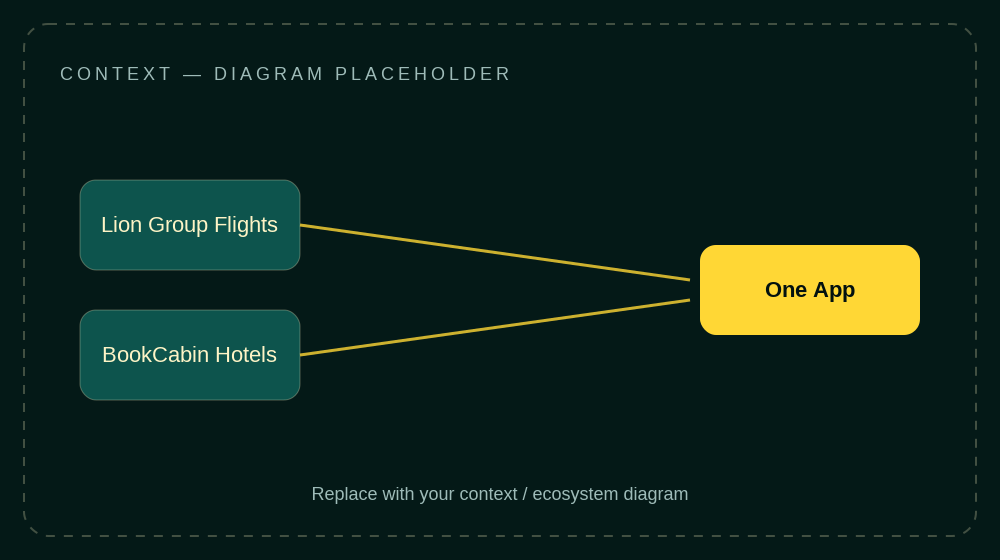
BookCabin has been part of the Lion Group ecosystem since 2020. The team kept getting restructured, and when I joined in 2025 I was handed one big thing: the hotel business. The plan looked simple on paper — BookCabin was known for Lion Group flights, and bookable hotels should make that positioning stronger.
The hotel product already existed, but it ran almost entirely on third-party providers. Their margin was our margin. We did not hold inventory. To own it, we needed a place where hotels could sign up, set prices, manage availability, and check rental and sales reports. In this industry that platform has a name: an extranet. There was no shortcut, so we built one. We called it Cozy.
02 — Role
Solo design lead, first sketch to shipped.
I was the product designer on Cozy, and for a stretch I was effectively the only product person on it. End to end: signup and onboarding, property setup, room lists, pricing, availability, all the way to settlement.
Our product manager joined later, when the work was already ready to develop.
03 — Constraints
Almost no knowledge to borrow.
Staffing was thin, and there was almost no knowledge to borrow. Information about hotel extranets is hard to find. Few people use them, and documentation barely exists.
I learned the domain by talking to operations and by mapping the flow that was already running. I did the product scoping and the technical assessment myself, so the effort we spent made sense against what we got out.
04 — Process
People don’t mind paying more. They mind being told the total too late.
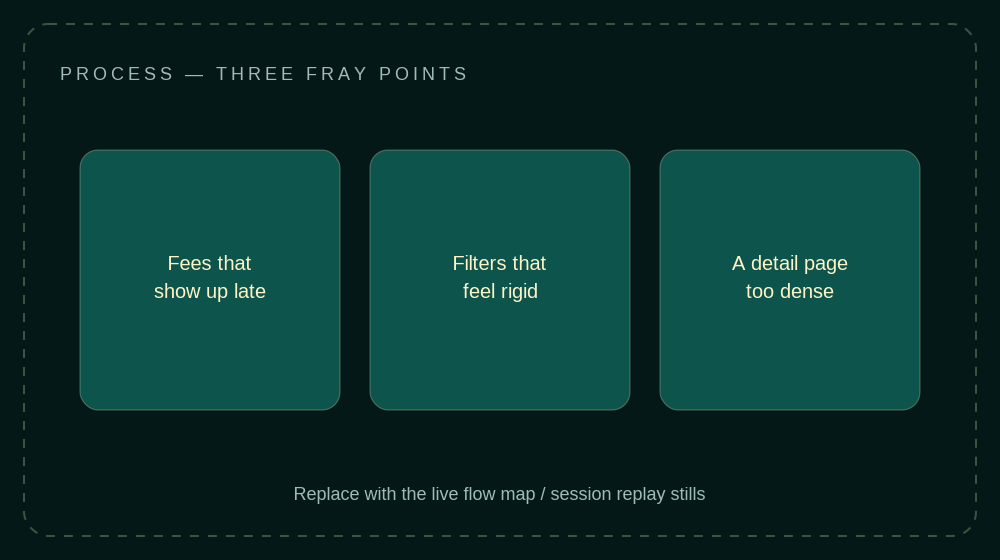
I started from the flow that was live. Mapping it surfaced three spots where things frayed: fees that showed up late, filters that felt rigid, and a detail page that was too dense. Usability tests and session replays confirmed the pattern — people walked away at the price breakdown, at the very last step.
- Price honesty up front
- Controls given step by step instead of all at once
- A calmer information density
05 — Why we borrowed
Borrow first, earn, then invent.
We were roughly ten years behind the competitors in hotel tech, and we had to move fast. So I set a working rule, in four moves.
- Start from patterns that already work elsewhere.
- Check whether that niche actually matters here.
- Adapt it to local context instead of copying it.
- Prove it in one city or one channel first, then scale with systems rather than ambition.
The honest name for that is borrow first, earn, then invent. It is the same shape as every practical product strategy, but it only works if the “earn” is real revenue, not a demo.
06 — Impact
From zero owned supply to 110 live hotels.
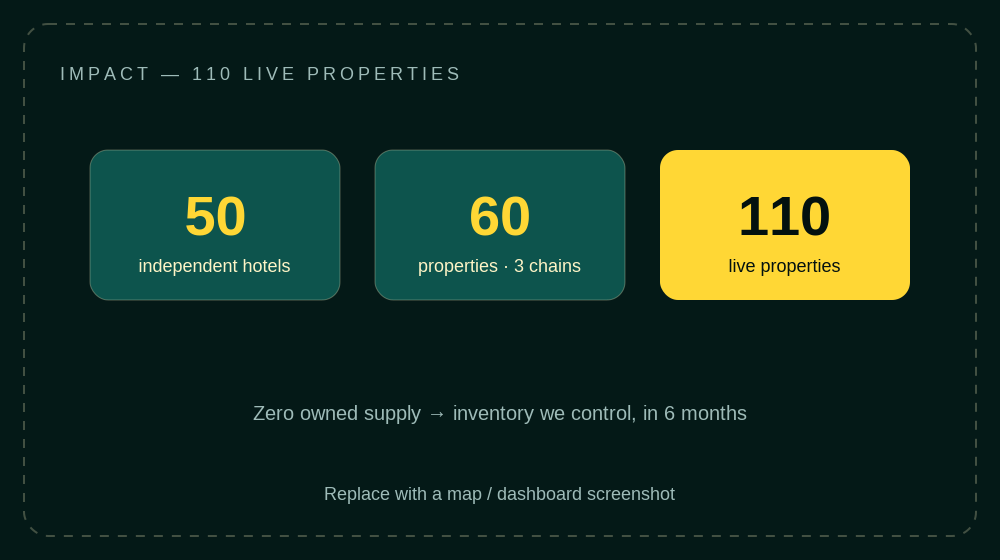
We onboarded 50 independent partner hotels and 60 properties across 3 chains — 110 live properties inside 6 months of the first release. The business went from zero owned supply to an inventory we control.
Concrete examples are on the Post Hotel page.
The point, not the problem
No domain knowledge, no design system, no product manager until the end. That turned out to be the point, not the problem.
← Back to all workFindings, Reflections & Conclusions
Price honesty up front
People do not mind paying more. They mind being told the total too late. Surface the full price early, then reveal controls step by step instead of all at once.
Borrow first, earn, then invent
When you are a decade behind, start from patterns that already work, adapt to local context, and prove it in one city or channel before scaling with systems rather than ambition.
Scoping is design work
With no PM and no domain knowledge, doing the product scoping and technical assessment myself was what kept the effort honest against the outcome.